10 facts about eating healthy for better health and nutrition

10 facts about eating healthy for better health and nutrition
Healthy eating is often presented as a long list of rules: avoid this, count that, never enjoy dessert, and somehow make every meal look like it belongs in a magazine. In reality, better nutrition is much more practical. It is about giving your body the nutrients it needs while building habits you can maintain on busy days, during travel, and even when your motivation is hiding under the sofa.
Food affects far more than your weight. It supports energy, digestion, immunity, muscle function, heart health, sleep, and mental well-being. The good news is that you do not need a perfect diet to enjoy these benefits. Small, consistent choices can make a meaningful difference.
Here are ten useful facts about eating healthy for better health and nutrition, along with simple ways to apply them in everyday life.
Healthy eating is about balance, not perfection
A nutritious diet does not require you to eliminate every food you enjoy. A balanced approach includes a variety of foods in sensible portions. Vegetables, fruits, whole grains, legumes, nuts, seeds, dairy or fortified alternatives, and protein-rich foods can all have a place on your plate.
There is also room for less nutrient-dense foods. A slice of cake at a birthday party does not cancel out weeks of nourishing meals. Problems usually arise when highly processed foods become the main source of calories, fiber, and essential nutrients.
Try thinking in terms of your overall eating pattern rather than judging one meal. If breakfast was light on protein and fiber, you can balance your day with a lunch built around beans, vegetables, and whole grains. Nutrition is not a pass-or-fail exam.
Whole foods provide more than isolated nutrients
Whole or minimally processed foods often contain a useful combination of vitamins, minerals, fiber, water, protein, and protective plant compounds. An orange, for example, provides vitamin C, fluid, fiber, and natural sweetness. Orange-flavored candy may provide sweetness, but it does not offer the same nutritional package.
This does not mean every packaged food is unhealthy. Frozen vegetables, canned beans, plain yogurt, and canned fish can be convenient and nutritious choices. The key is to look at the whole food and the ingredient list rather than assuming that “processed” automatically means bad.
A practical grocery strategy is to fill most of your basket with foods that look close to their original form. Add convenient staples when they help you cook more often and avoid relying on fast food during a hectic evening.
Fiber supports digestion and long-term health
Fiber is found mainly in plant foods, including vegetables, fruits, beans, lentils, oats, whole-grain bread, nuts, and seeds. It helps support regular bowel movements, feeds beneficial gut bacteria, and can help you feel satisfied after meals.
Fiber is also linked with better heart health and improved blood sugar management. Yet many adults do not consume enough of it. A simple way to increase intake is to make gradual swaps:
- Choose oats or whole-grain cereal instead of refined breakfast products.
- Add beans or lentils to soups, salads, tacos, and pasta sauces.
- Keep fruit available for snacks and add vegetables to sandwiches or wraps.
- Choose brown rice, quinoa, barley, or whole-wheat pasta more often.
Increase fiber slowly and drink enough fluids. Moving from very little fiber to a large amount overnight can leave your digestive system feeling less than thrilled.
Protein helps maintain strength and fullness
Protein is essential for building and repairing muscles, supporting immune function, and producing important hormones and enzymes. It can also help you feel full between meals, which may reduce constant snacking.
Good sources include eggs, fish, poultry, lean meat, Greek yogurt, cottage cheese, tofu, tempeh, beans, lentils, nuts, and seeds. You do not need to eat animal products to obtain enough protein, but plant-based eaters should include a variety of protein sources throughout the day.
Try adding a protein source to each main meal. For example, pair oatmeal with yogurt and nuts, add chickpeas to a salad, or serve roasted vegetables with tofu and quinoa. A meal built only around refined carbohydrates may provide quick energy but leave you searching for snacks soon afterward.
Colorful plants bring variety to your plate
The color of fruits and vegetables often reflects different beneficial plant compounds. Dark leafy greens, red peppers, orange carrots, purple berries, and yellow squash each contribute their own mix of nutrients and antioxidants.
No single fruit or vegetable provides everything your body needs. That is why variety matters more than searching for one “superfood.” Blueberries can be a nutritious addition to breakfast, but they do not replace leafy greens, beans, or other colorful produce.
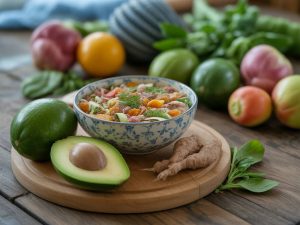
Make your plate visually appealing by aiming for several colors across the day. Add spinach to an omelet, frozen berries to a smoothie, tomatoes to a grain bowl, or roasted carrots to dinner. Healthy food does not have to be boring beige.
Healthy fats are important for the body
Fat has an important role in brain function, hormone production, cell health, and the absorption of fat-soluble vitamins. The goal is not to remove fat from your diet but to choose sources more often.
Avocados, olive oil, walnuts, almonds, chia seeds, flaxseeds, and fatty fish such as salmon provide unsaturated fats. These can fit into a heart-conscious eating pattern when used in appropriate portions.
Portion size still matters because fats are energy-dense. A handful of nuts can be satisfying, while several handfuls eaten straight from the bag may become an accidental meal. Try serving nuts into a small bowl and using olive oil with a measuring spoon when you are learning how much you prefer.
Hydration affects energy and concentration
Water is involved in nearly every major process in the body. Even mild dehydration may contribute to headaches, tiredness, constipation, or difficulty concentrating. Thirst is not always a reliable early signal, especially during exercise or hot weather.
Water is usually the simplest everyday choice, but unsweetened tea, milk, and water-rich foods such as cucumbers, oranges, soups, and melons also contribute to fluid intake. If plain water feels dull, add lemon, lime, mint, or berries.
Sugary drinks can add a surprising amount of sugar without making you feel full. Replacing one soft drink or sweetened coffee each day with water or an unsweetened alternative is a small change that can reduce excess sugar intake over time.
Breakfast is optional, but balanced meals matter
Breakfast is often called the most important meal of the day, but there is no universal rule that everyone must eat immediately after waking. Some people feel energized by breakfast, while others prefer a later first meal.
What matters more is the quality and balance of your meals across the day. If you eat breakfast, combine protein, fiber, and healthy fats to support lasting energy. Examples include Greek yogurt with berries and seeds, eggs with whole-grain toast and fruit, or oatmeal topped with peanut butter.
If you skip breakfast, plan a nourishing lunch rather than waiting until you are extremely hungry and eating whatever is easiest to grab. Hunger is not a character flaw, but it can make thoughtful decisions more difficult.
Meal planning makes healthy choices easier
Many people do not struggle with knowing what healthy food looks like. They struggle with time, decision fatigue, and an empty refrigerator at the end of a long day. Basic planning can solve much of the problem.
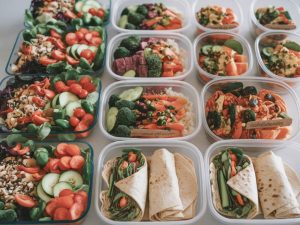
Choose two or three meals for the week, prepare one or two ingredients in advance, and keep a few emergency options available. Cooked grains, washed vegetables, hard-boiled eggs, canned beans, frozen produce, and rotisserie chicken can become quick meals with minimal effort.
Before grocery shopping, ask yourself three questions:
- What protein sources will I use this week?
- Which vegetables and fruits are easy for me to eat?
- What can I prepare in less than fifteen minutes on a busy day?
Planning does not need to mean eating the same meal every day. It simply creates a healthier default when your schedule becomes unpredictable.
Eating slowly can improve awareness
It takes time for the body to recognize fullness. Eating quickly, especially while distracted by a screen, can make it easier to consume more than you intended. Slowing down allows you to notice taste, texture, hunger, and satisfaction.
Try putting your fork down between bites, chewing thoroughly, and eating at a table when possible. You do not need to turn every meal into a silent meditation session. Even a few screen-free minutes can help you pay attention.
Mindful eating also means noticing emotional triggers. Are you eating because you are hungry, bored, stressed, or simply because snacks are within reach? The answer is not always to say no. Sometimes you need food, and sometimes you need rest, a walk, or a conversation. Awareness gives you more choices.
Nutrition works best alongside movement and sleep
Healthy eating is powerful, but it does not operate in isolation. Regular physical activity supports cardiovascular health, muscle strength, mobility, mood, and metabolic health. You do not need an intense workout routine to begin. Walking, cycling, gardening, dancing, and strength exercises all count.
Sleep matters too. Poor sleep can increase cravings, lower energy, and make meal planning feel harder. A consistent sleep schedule, a relaxing evening routine, and limiting bright screens before bed may support better rest.
Think of health as a team effort. A nourishing meal can fuel a workout, movement can improve mood, and quality sleep can make it easier to prepare balanced food the next day. You do not need to transform every habit at once. Choose one realistic improvement and build from there.
Eating healthy is not about chasing a perfect body or following the latest food trend. It is about giving yourself reliable nourishment through habits that fit your real life. Start with one change: add a vegetable to dinner, drink more water, include protein at breakfast, or prepare a simple meal before the week gets busy.
Over time, these small decisions become familiar. And when healthy choices feel normal rather than restrictive, better nutrition becomes much easier to maintain.